

When we consider types of native plants, vines are a category that is sometimes overlook. Vines add visual interest and variety to a garden, making them the perfect choice to add something new or different.
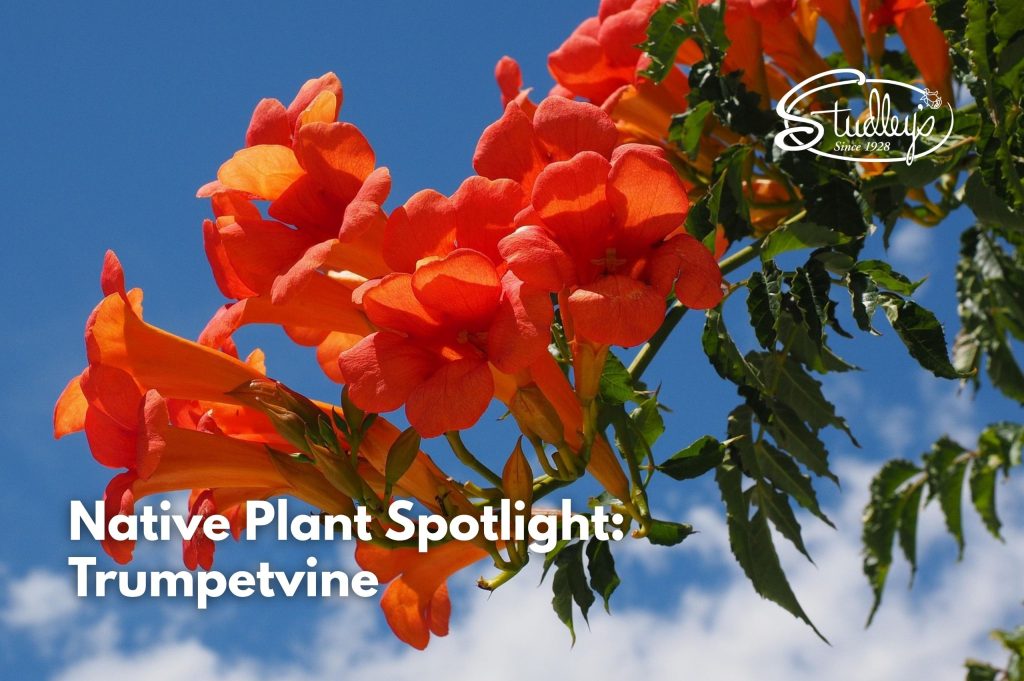
Trumpetvine is a native pollinator plant that will add bright colorful flowers and rich green foliage. Hummingbirds love trumpetvine flowers, so adding these plants will also attract new wildlife to your garden. Despite its many attractive characteristics, trumpetvine is a higher maintenance plant than other native perennials. Be prepared for a fair amount of pruning.
A plant’s growth habit is the direction that the branches or stems spread. The usual options are up or sideways (often both), but vines have a twining and trailing habit of growth. This means that the plant likes to grow along something, such as a fence or a trellis or even a retaining wall.
Trumpetvine plants will grow around a fence or trellis on their own, but you can also encourage them to grow in a specific direction. Take the longest and strongest shoot and spiral it around your fence or trellis in the direction it naturally wants to grow. Then, secure the vine gently with soft ties (such as fabric strips or floral tape) every few feet. Never use rigid or tight wire to secure the vine as this can cut into the stem and damage the plant. With this growth support, the vine will continue to grow in the encouraged direction and have a firm grip on the fence or trellis. When the vine’s firm grip is established, you can remove the ties.
Trumpetvine grows quickly, and so is sometimes referred to as invasive. However, this description is somewhat misleading because trumpetvine is a plant native to North America. Although the plant’s aggressive growth can certainly seem invasive, the trumpetvine is more accurately described as an aggressive plant rather than an invasive one. If you are cultivating a garden of native plants and want some pollinators to attract birds, trumpetvine is an excellent choice.
Climbing vines like trumpetvine tend to be leggy, so underplanting with low-growing facer plants is a good idea. To keep the trumpetvine plant growing in the desired area and direction, regular pruning is necessary. You can prune trumpetvine at any time, but you do need to look out for suckering.
What are plant suckers? Suckers are vigorous new shoots that grow from the roots or base of a plant’s stem. Some plants use suckers naturally to form thickets, but suckers often steal vital energy from the rest of the plant. Trumpetvine plants often have a problem with suckering, so to keep the plant healthy, pruning those new shoots as they appear is crucial.
Native pollinator plants bring wildlife into your garden, which not only livens up your outdoor space, but also supports the local ecosystem. Trumpetvine in particular attracts hummingbirds, which can make your garden feel more exotic, even though all the plants and animals are native.
Bring more wildlife into your garden with local plants from Studley’s. If a high-maintenance plant like trumpetvine seems like more work than you are prepared for, we understand. We cultivate a wide variety of native plants in our greenhouses and Garden Center, so we have something for every gardener. Visit us in Rochester, NH, or use the Plant Finder tool on our website to start adding native plants to your garden!
Fresh Blooms, Fresh Ideas