



We choose which plants to keep in our homes or add to our gardens for a variety of reasons. In some cases, the look of a plant simply appeals to us. In others, we have more practical reasons, such as creating privacy screens with shrubs or growing vegetables to eat or share with friends and family. Often, we also select plants based on their fragrance, regardless of their other attributes. In fact, fragrant plants offer a host of benefits which make this type of plant an even more valuable asset to your home or garden.
First, what gives plants their fragrance? The answer is volatile organic compounds (VOCs). Every plant produces a unique cocktail of lightweight chemicals that react with the air and evaporate easily at room temperature. Those evaporating chemicals are what we smell as a plant’s fragrance. Calling these chemicals “volatile” does not mean that they are dangerous or toxic, only that they react with the air without another agent or catalyst.
A plant’s fragrance can serve a few different functions. The most common are attracting pollinators and deterring predators. In general, sweet floral scents attract pollinators, while earthy herbal smells repel animals who want to eat the plant. As humans, we enjoy the scents of these plants, but there are additional benefits to incorporating fragrant plants into your home or garden.
Although fragrant plants developed their scents for reasons other than human enjoyment, we still receive multiple benefits from them, such as overall wellness and mental health outcomes, positive environmental and ecological impacts, and several household and practical uses.
We all know from experience that a pleasant aroma can improve your mood. In fact, natural fragrances are linked to increases in positive emotions such as joy, calm, and happiness. Natural plant aromas can also reduce stress and anxiety and even improve sleep.
Including fragrant plants in your garden or houseplant collection can also provide support your other plants. Many fragrant plants, especially herbs like mint and lavender, naturally repel common pests without the need for synthetic chemicals or insecticides. Sweet-smelling flowers and plants attract pollinators, such as bees, butterflies, and hummingbirds, which supports local biodiversity.
Incorporating fragrant plants into your interior environments or external landscapes offers multiple practical benefits as well. Many plants with strong scents are also edible or are common ingredients in herbal teas or homemade bath products. Home gardeners are returning to the practice of cultivating a “kitchen garden” which includes various herbs as well as fruits and vegetables. Even gardeners who live in apartments or with limited outdoor space can grow indoor herb gardens or small edible plants.
Outside of plants you can eat or use for other practical purposes, fragrant plants act as natural air fresheners. Synthetic air fresheners often contain phthalates or other harmful chemicals. Plus, the synthetic fragrance never quite emulates the real thing, so you can always tell when an aroma is manufactured. The natural scents from the actual fragrant plants are more enjoyable and provides the additional benefits of growing live plants in your living space.
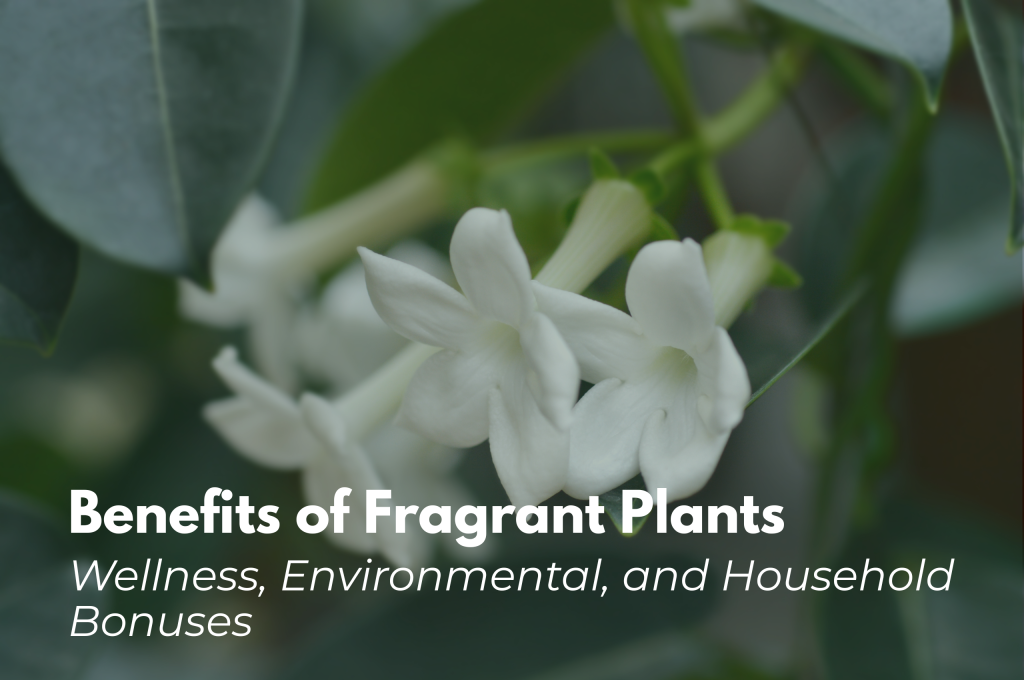
Whether you are a houseplant collector or hobbyist gardener, fragrant plants offer plenty of benefits for both you and your garden. At Studley’s, our greenhouses and garden center are full of aromatic plants. For indoor plants, we recommend scented geraniums, Madagascar Jasmine, or culinary herbs. Our Plant Finder tool includes several aromatic plants for gardeners to explore, including Fragrant Delight Heliotrope, Tahiti Daffodils, garlic chives, and lemon verbena. However, our houseplant and garden plant selections extend far beyond those examples, so if you are looking for a specific plant or fragrance, we can help you find the best plants to incorporate natural fragrances to your home or garden.
Fresh Blooms, Fresh Ideas